
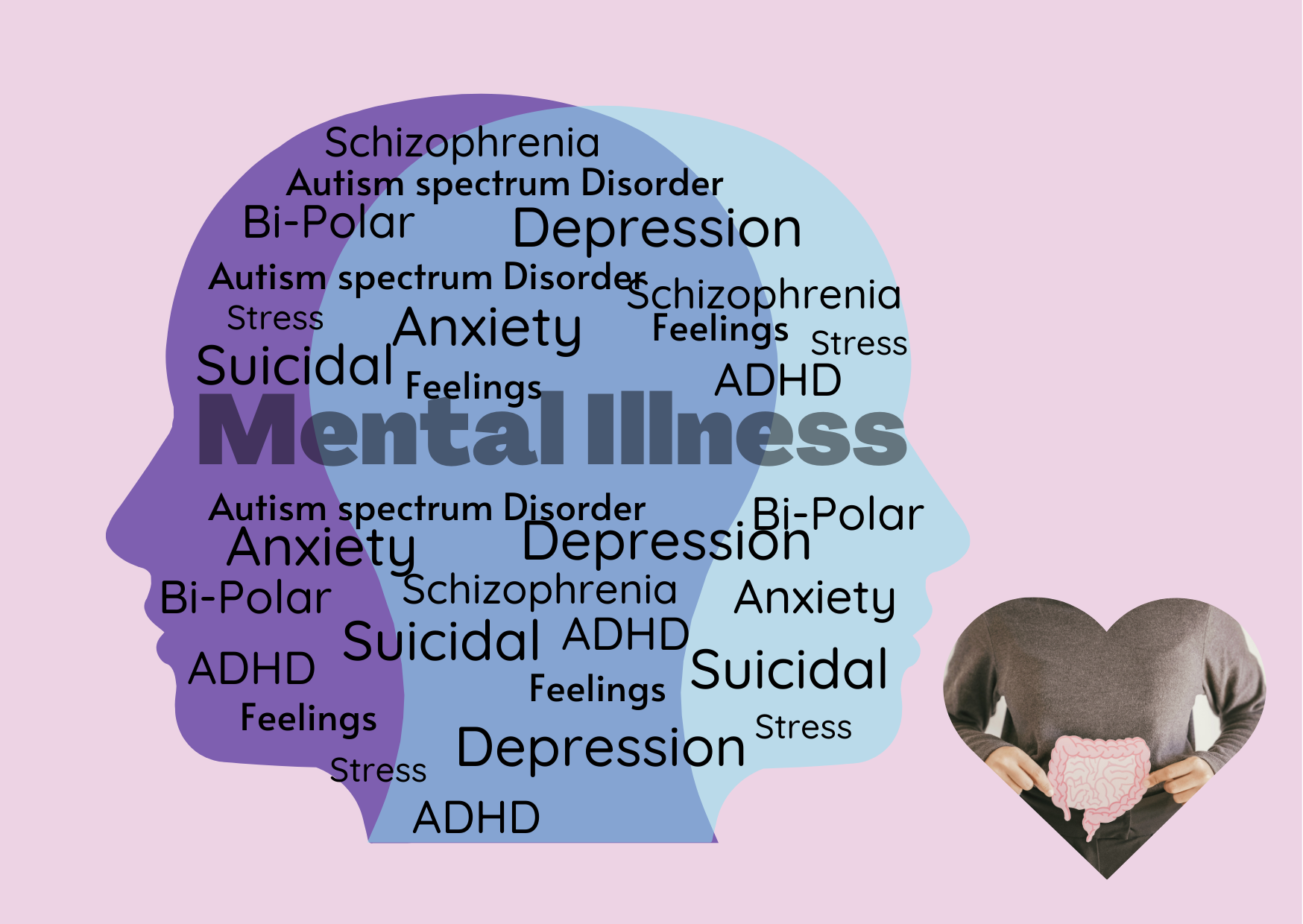
The World Health Organisation defines health as “a state of complete physical, mental and social well-being and not merely the absence of disease or infirmity.” Your physical, mental and social well-being are all connected; if one isn’t good, the others will suffer. Think back to a time you were physically unwell; I highly doubt you could say you were feeling on top of the world mentally. Mental health has become a severe public health concern. Thankfully, people are talking more about the importance of mental health, but there is still a severe lack of available services, especially in Ireland. In 2019, the World Health Organisation (WHO) reported that 1 in 8, or 970 million people globally, live with some form of mental illness. Anxiety and depression are the most common mental health disorders.
When you think of mental illness, you think of your brain. The phrase ‘it’s all in your head’ would be used to say you’re imagining it basically; a2suck it up. However, what if it’s not ‘all in your head’ and when I say this, I mean physically…. what if the majority of the mental health issues come from your gut? After all, didn’t the father of modern medicine, Hippocrates, say, “All diseases start in the gut”?
The Gut-Brain-Axis (GBA)
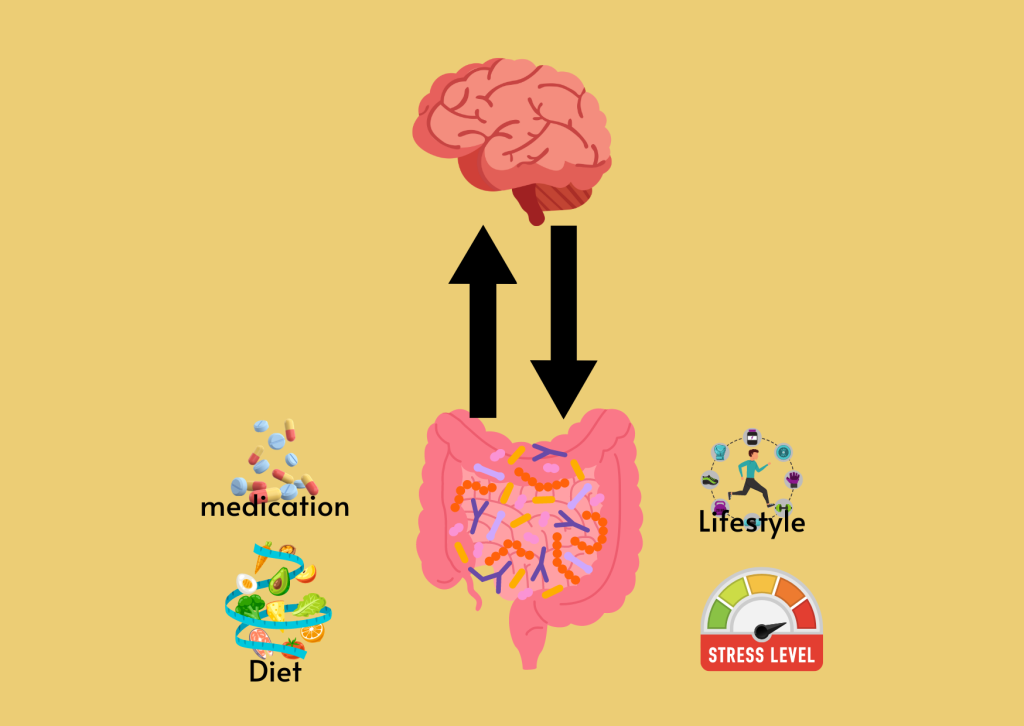
Your gut and your brain are closely connected. They send messages via the vagus nerve using neurotransmitters, the immune system using cytokines, and the endocrine system using hormones. So, the title of ‘The Second Brain’ is appropriate for the gut. When your gut microbiome is not balanced, this causes inflammation and can interfere with this communication, leading to issues with the regulation of anxiety, mood, cognition, and pain. Serotonin, Dopamine and Gama-aminobutyric acid (GABA) are all neurotransmitters that play an essential role in mood and cognition.
The Mood Regulators
- Serotonin acts as a hormone and a neurotransmitter, which is very important in regulating mood, sleep, appetite, and pain. It also affects digestion, nausea, bone health, blood clotting, wound healing and sexual desire. Your gut microbes make 90% of serotonin; the other 10% is produced in the Raphe nuclei in the brain. Bifidobacterium and Lactobacillus are the bacteria genera that primarily produce Serotonin. Lack of serotonin can lead to issues with sleep because serotonin is a precursor to melatonin. Melatonin helps the body prepare for sleep. Problems with sleep can also lead to mental health issues. (1).
- Certain bacteria in the gut, specifically Bifidobacterium and Lactobacillus, produce GABA, which can influence the enteric nervous system (the nerves in the gut) (2). Low levels of GABA are associated with heightened anxiety, depression, and stress. GABA has a calming effect on the body. In the gut, GABA can also help regulate gut motility, secretion and visceral pain.
- Dopamine is primarily produced in the brain, and it is often referred to as the “pleasure chemical”. This is because it is the primary regulator of the reward circuit, as well as making decisions, memory, attention and motivation. The gut microbes play a significant role in the synthesis, bioavailability and release of Dopamine (3) (4).
How To Use Diet To Improve Your Mental Health
So now you see how vital gut health is regarding mental health. A happy gut means a happy you! The harmful effects of the Western diet on physical and psychological health have been well documented. High ultra-processed foods, refined sugars, artificial sweeteners, and colourings are not gut-friendly. Of course, many other factors affect gut health, such as environment, sleep, how physically active you are, how stressful your life is, etc., but diet plays a massive role.
Several mental health disorders, such as depression, anxiety, and spectrum disorder, have well-established links between gut dysbiosis. (5)(when your gut microbiome is out of whack).
If you suffer from a mental health disorder, or even if you don’t, but you feel you’re mood isn’t so good, look at your diet and change it. Hence, it rebalances your gut microbiome, which can help alleviate symptoms and manage your condition. Include probiotic foods such a live natural yoghurt, sauerkraut, kombucha and kimchi. Include prebiotic foods such as garlic, onions, asparagus, leeks, bananas, apples, avocado, barley, oats, wheat bran, seaweed, and cocoa. Yes, chocolate, but only dark chocolate can act as a prebiotic. The darker the chocolate, the better.
If you’d like to learn more about your gut microbiome, why not try a simple at-home microbiome testing kit? The results will give me the information I need to make a completely personalised dietary plan as part of your Personalised Nutrition Package to help your microbiome flourish, thus making you feel fabulous from the inside out!
References
1. Scott AJ, Webb TL, Martyn-St James M, Rowse G, Weich S. Improving sleep quality leads to better mental health: A meta-analysis of randomised controlled trials. Sleep Medicine Reviews. 2021;60:101556.
2. Xiong RG, Li J, Cheng J, Zhou DD, Wu SX, Huang SY, et al. The Role of Gut Microbiota in Anxiety, Depression, and Other Mental Disorders as well as the Protective Effects of Dietary Components. Nutrients. 2023;15(14).
3. González-Arancibia C, Urrutia-Piñones J, Illanes-González J, Martinez-Pinto J, Sotomayor-Zárate R, Julio-Pieper M, Bravo JA. Do your gut microbes affect your brain dopamine? Psychopharmacology. 2019;236(5):1611-22.
4. Hamamah S, Aghazarian A, Nazaryan A, Hajnal A, Covasa M. Role of Microbiota-Gut-Brain Axis in Regulating Dopaminergic Signaling. Biomedicines. 2022;10(2).
5. Appleton J. The Gut-Brain Axis: Influence of Microbiota on Mood and Mental Health. Integr Med (Encinitas). 2018;17(4):28-32.
6. Anderson SC, Cryan JF, Dinan T. The psychobiotic revolution: mood, food, and the new science of the gut-brain connection: National Geographic Books; 2017.