
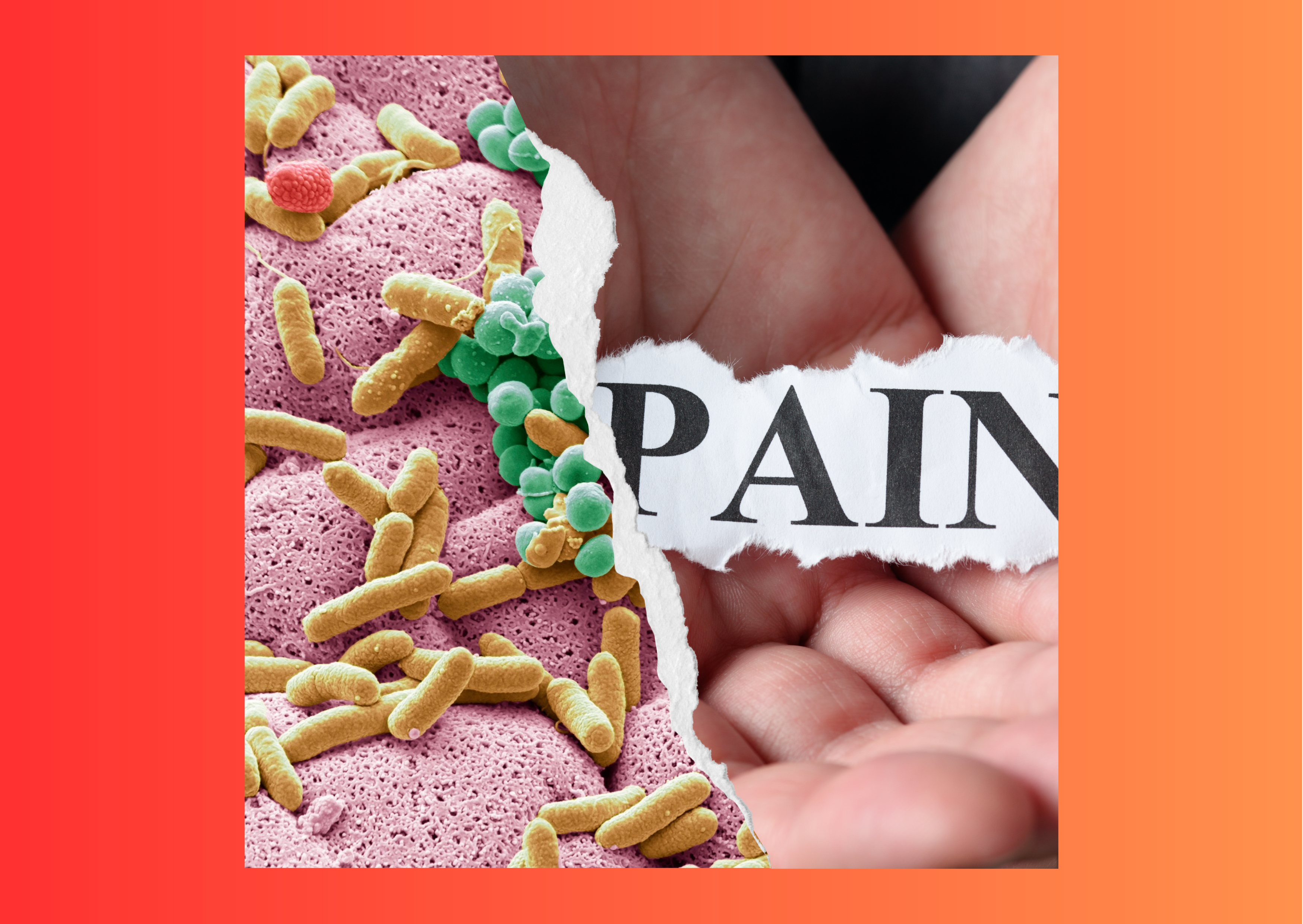
Imagine waking up every morning with some pain. Imagine never being able to say to the doctor or nurse that you are a 0 on the pain scale. That is what chronic pain is, and currently, it affects approximately one and a half million people worldwide. That’s almost 20% of the global population. There are many reasons for chronic pain, from injury to illness, but whatever the reason, it is something that makes living an everyday, happy life very difficult.
The amazing ecosystem in your gut
A lot of the time, chronic pain is treated with medication, and sometimes herbal remedies can also help, but what if we already have the mechanisms to alleviate pain inside of our bodies? Your gut microbiome is made up of over 100 trillion microorganisms. There are more microorganisms in and on our bodies than in human cells. These microorganisms have many essential functions, including absorption and production of nutrients, immunity and metabolism. When your gut microbiome is balanced, everything is going hunky dory, but when the microbiome is out of whack, otherwise known as dysbiosis, your health starts to suffer. This can occur in many different ways as the microbiome is involved in so many aspects of our body. Still, in this Blog, I will focus on how gut dysbiosis can affect chronic pain and what you could do to rebalance your gut microbiome and alleviate the pain.
The Gut-Brain-Axis
First, I will discuss the Gut-Brain Axis (GBA). The gastrointestinal tract includes the mouth, oesophagus, liver, gallbladder, stomach, pancreas, duodenum, small intestine, colon, appendix, and rectum. Through direct and indirect mechanisms, it communicates bidirectionally with the central nervous system (brain and spinal cord) via the vagus nerve, meaning the messages go both ways. The GI tract responds to central stimulations influenced by microorganisms. This means an imbalance in your gut microbiome can lead to inflammation, which can interfere with this communication pathway and can lead to chronic pain. Knowing this the gut microbiome don’t just possibly influence the neurons that transmit pain, but also how acute pain signals turn chronic.
Research on the gut microbiome and chronic pain
Studies looking at people with chronic pain conditions such as endometriosis, fibromyalgia, IBS, Migraines and rheumatoid arthritis, among others, have seen that people living with these conditions have altered gut microbiomes compared to people not living with these conditions. However, more research is needed to find a way to provide relief for everyone with these conditions. At present, it’s very much a personalised approach.
Studies have shown that when people with Endometriosis alter their diet, they have some relief from pain. Within a few days of changing your diet, your gut microbiome changes, too, so making healthy changes will give you quick results! Also, making unhealthy changes will give you quick but not-so-good results.
This idea about the connection between the gut microbiome and pain is not new. Twenty years ago, they were looking at Irritable Bowel Syndrome (IBS) and visceral pain, which is any pain that involves the abdominal and pelvic area. Chronic visceral pain can be difficult to treat even with opioids, which in themselves can cause issues with the gut—Functional Gastrointestinal Disorders (FGID) such as IBS, abdominal Migraine or functional dyspepsia. Human trials using probiotics, which are living organisms you can buy in your health food shop or pharmacy and help boost the beneficial gut microorganism, showed slight but significant pain relief in visceral pain in IBS patients.
Some research has also shown that treating the gut microbiome can heal and ease pain from fibromyalgia and help diagnose it. Not only is Fibromyalgia extremely difficult to diagnose due to there not being one set test to diagnose it, but the symptoms often mimic those of other conditions, so it is frequently misdiagnosed. It was found that people with Fibromyalgia had altered gut microbiomes, which correlated with pain and fatigue, not medication, diet or other environmental factors. A 2023 study showed that people with Fibromyalgia had lower serum α muricholic levels (1), a bile acid produced by certain gut microbes. Some of these bile acids bind to the neurons on the spinal cord and suppress pain so that pain can flare up without them.
Immunity
Gut dysbiosis can also lead to an incorrect immune response, especially if you aren’t feeding your gut microbiome. There is a layer of mucous between the microbiome and your intestinal lining, and if you aren’t feeding your gut microbes right, they start to eat the mucous. This triggers your immune system, which will try to keep the gut microbes back. This all leads to inflammatory pain conditions.
Migraines
Migraines are another chronic pain condition in which the gut microbiome plays a role. Headaches come in different categories, but the symptoms of migraines include nausea, vomiting, photophobia and phonophobia. They are usually very debilitating. Migraines have been linked to GI illness, celiac disease, IBS and Helicobacter pylori infection. Serotonin production can be affected by gut dysbiosis, and as it is essential for regulating mood, sleep and pains, any disruption can cause migraines. The gut microbiome is critical to breaking down certain nutrients, producing them, and synthesising SCFA. However, some gut microbes can produce compounds such as terrain, which can trigger migraines. Having a balanced gut microbiome means the production of tyramine is under control. Stress and anxiety can also trigger migraines because the gut is closely connected to the brain. A diet is rich in fibre and fermented foods, low in processed food, and possibly including probiotics and prebiotics may help reduce migraines.
So, all in all, changing your diet to benefit your gut microbiome could be something that helps with chronic pain. It would be much better for you than taking loads of pain medications, which in themselves have plenty of nasty side effects.
If you want to really examine your gut microbiome and make positive changes to help with pain or your overall health, you can get a simple gut microbiome test kit sent directly to your home. It’s easy to use, and you can send it to a reputable lab, where you will be able to unlock the secret to your gut! What foods do you need to eat or avoid to nourish and restore it?
References
1. Minerbi A, Gonzalez E, Brereton N, Fitzcharles MA, Chevalier S, Shir Y. Altered serum bile acid profile in fibromyalgia is associated with specific gut microbiome changes and symptom severity. Pain. 2023;164(2):e66-e76.
2. Watson C. The gut microbiome and chronic pain. Nature. 2024;633.
3. Ustianowska K, Ustianowski Ł, Machaj F, Gorący A, Rosik J, Szostak B, et al. The Role of the Human Microbiome in the Pathogenesis of Pain. International Journal of Molecular Sciences. 2022;23(21):13267.